Shop Discovery Research
Last updated: 1. Jan 2026
To understand the contradicting reviews amongst users and define potential issues, our team delved deeper into the main functions and key features of Shop.
Main Features
Task Analysis
We performed a hierarchical task analysis to understand four key Shop tasks, identify potential pain points, and validate them through usability testing.
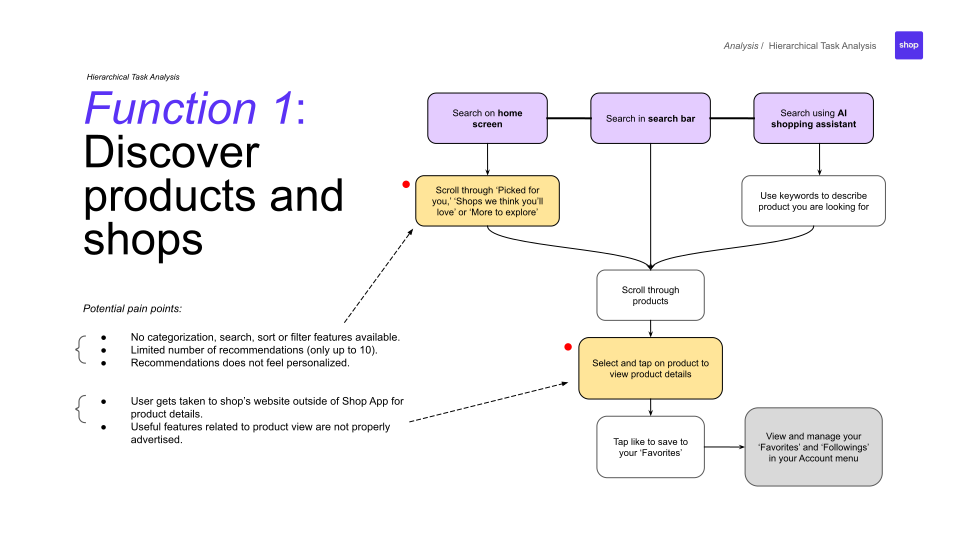
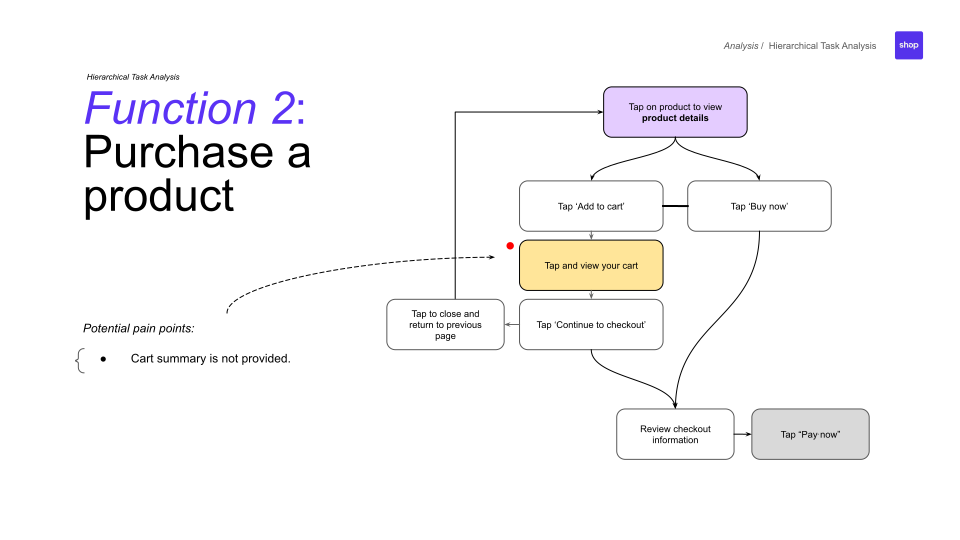
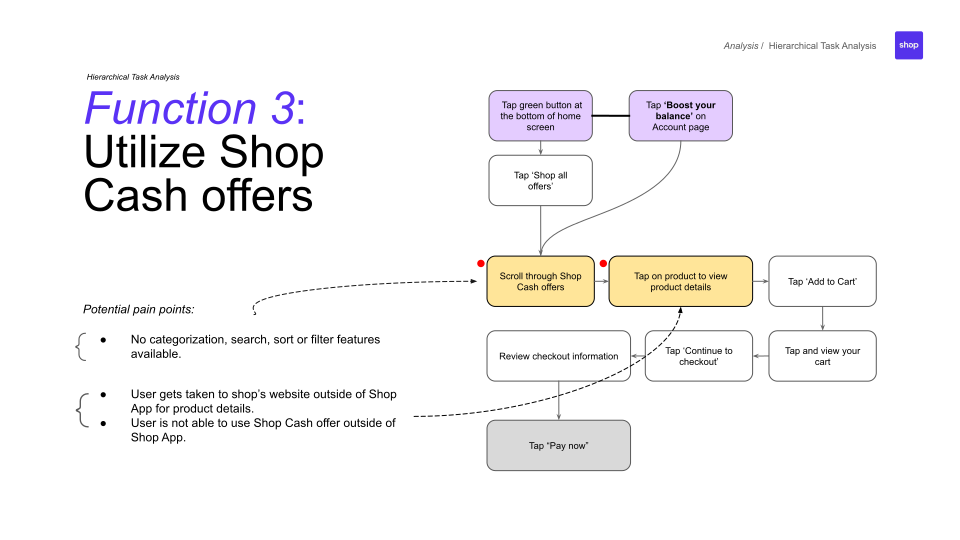
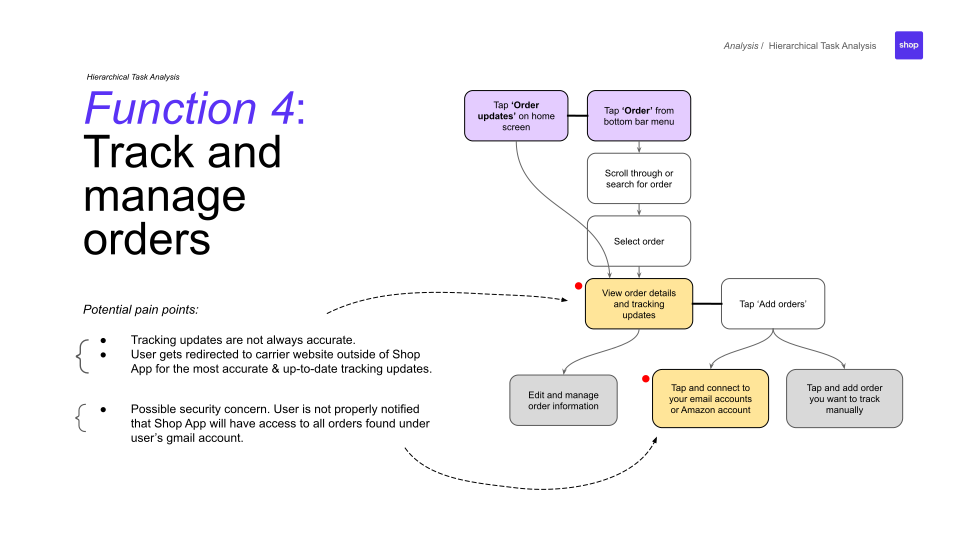
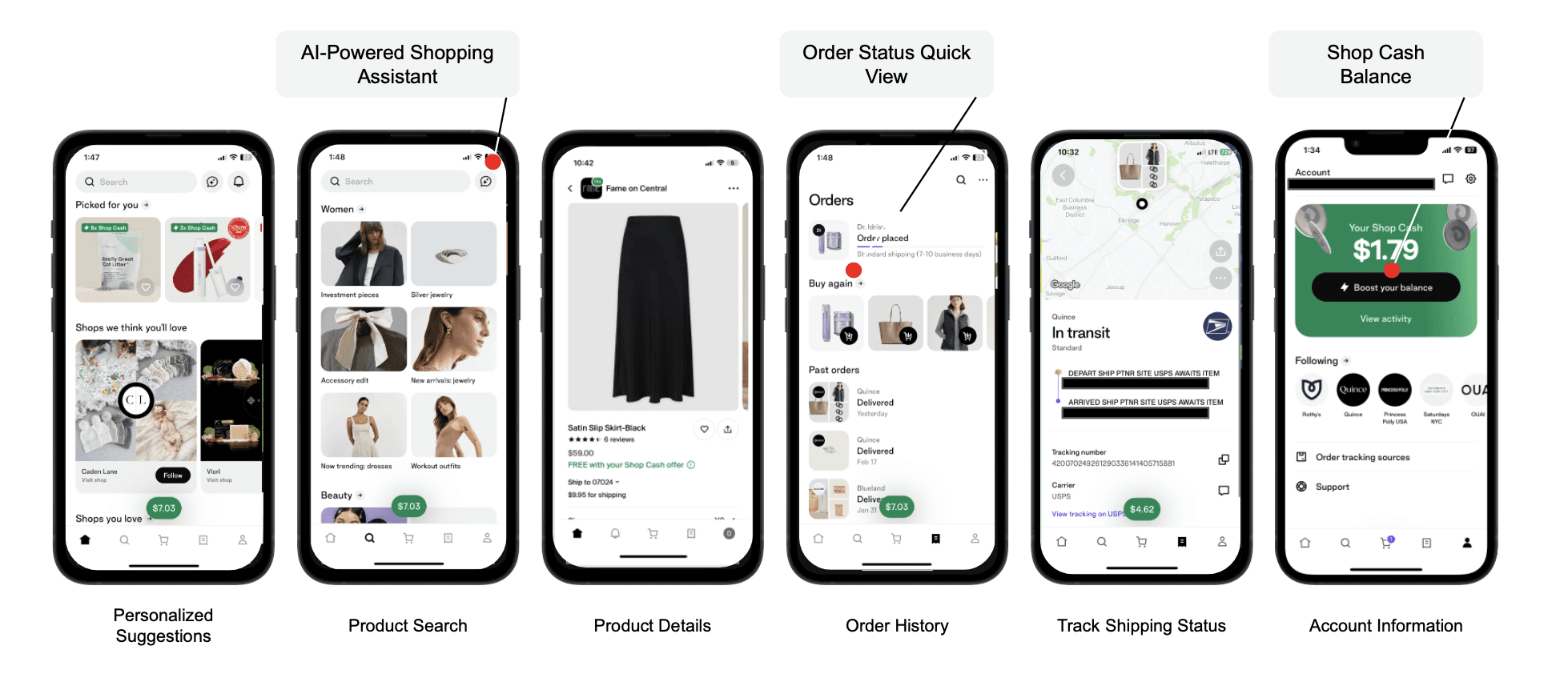
To better understand the user experience, we visualized the main tasks and flows within the Shop app. This helped us identify where users struggled with discoverability, unclear product information, and inconsistent tracking experiences, guiding our focus areas for design exploration.
Usability Studies
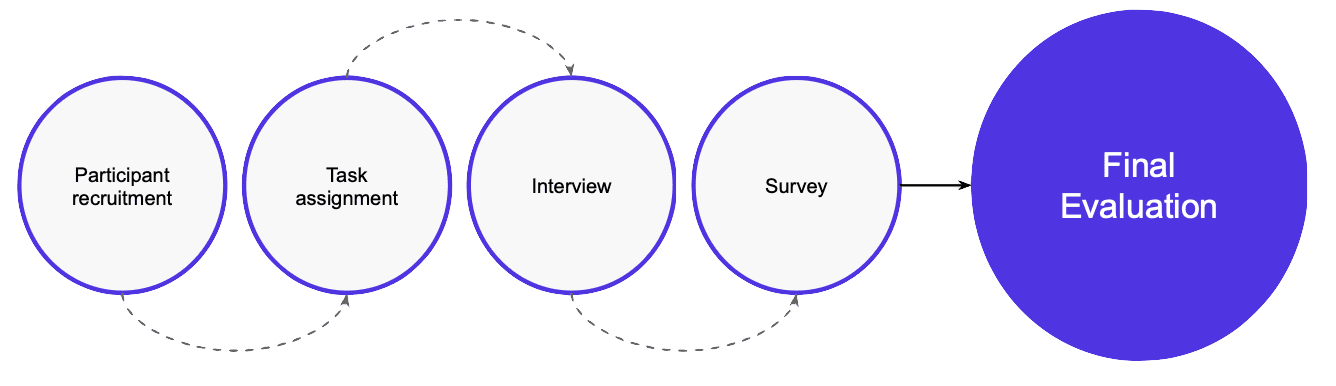
For our usability testing process it included the following: Usability Questionnaire, In-person/Zoom interviews, Video-recordings, and Data Analysis.
Tasks
Search running shoes & add the item to cart.
Like 5 items & follow 2 shops.
Search a perfect Valentine’s gift using AI shopping assistant.
Connect Shop to Amazon account and check tracking details on last purchase item.
Check Shop Cash balance and add a product with Shop Cash offer to your cart.
Findings
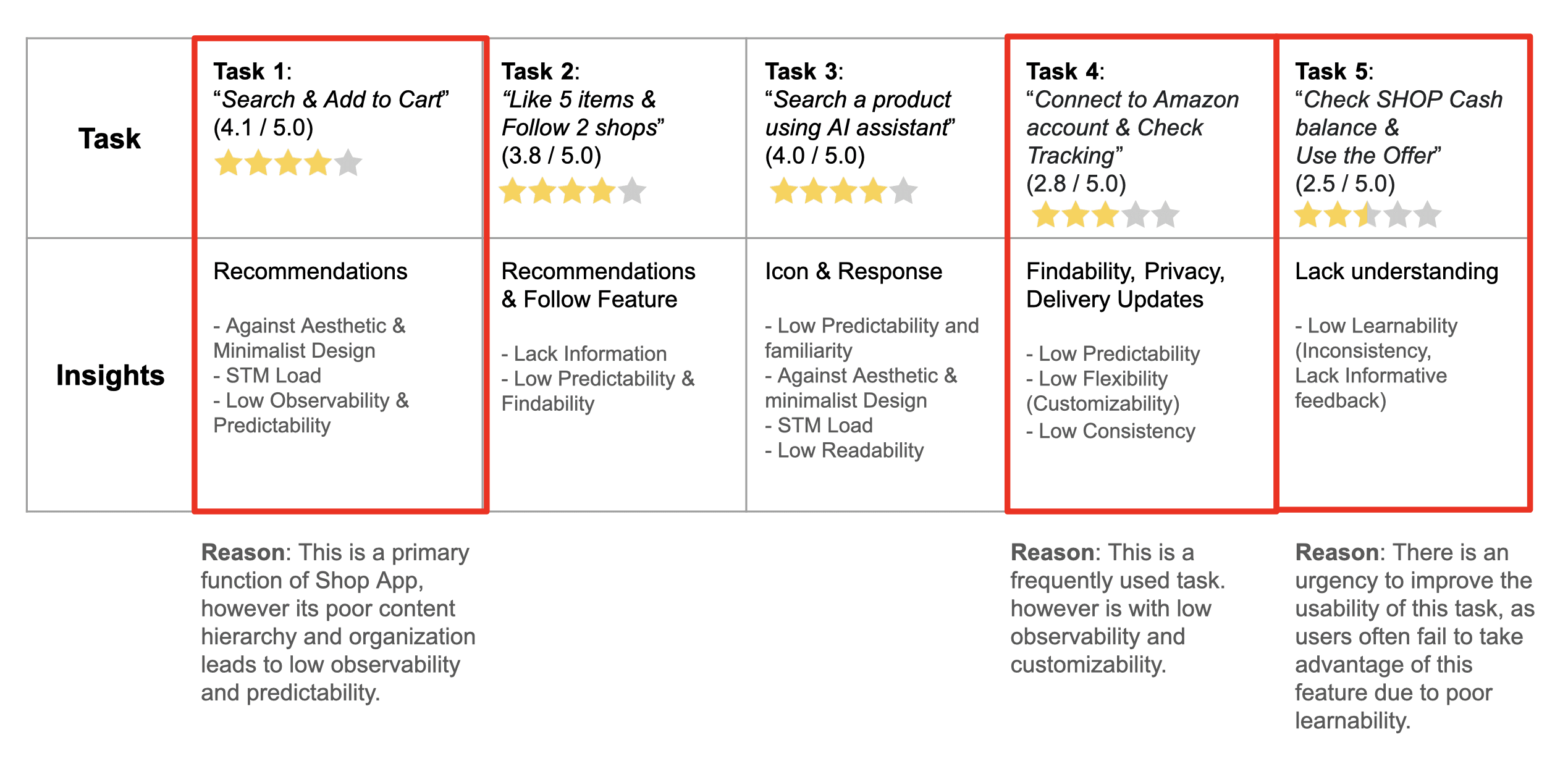
From these tasks we chose 3 to refine.
Search, Browse & Purchase
Users experienced frustration due to an overwhelming number of unorganized and irrelevant recommendations, limited product information, and difficulty shopping by category.
Track & Manage Orders
Users struggled with poor information hierarchy, limited control over filtering and sorting, privacy concerns when connecting accounts, and inconsistent or inaccurate tracking updates.
Find & Use Shop Cash
Limited visibility of Shop Cash, unclear guidance on how to earn or use it, and inconsistent terminology made the feature confusing and hard to discover.
Conclusion
Overall, our findings show that while Shop provides valuable functionality, gaps in discoverability, structure, and transparency create friction across key user tasks. These insights helped define focused design opportunities aimed at improving clarity, trust, and efficiency throughout the experience.